
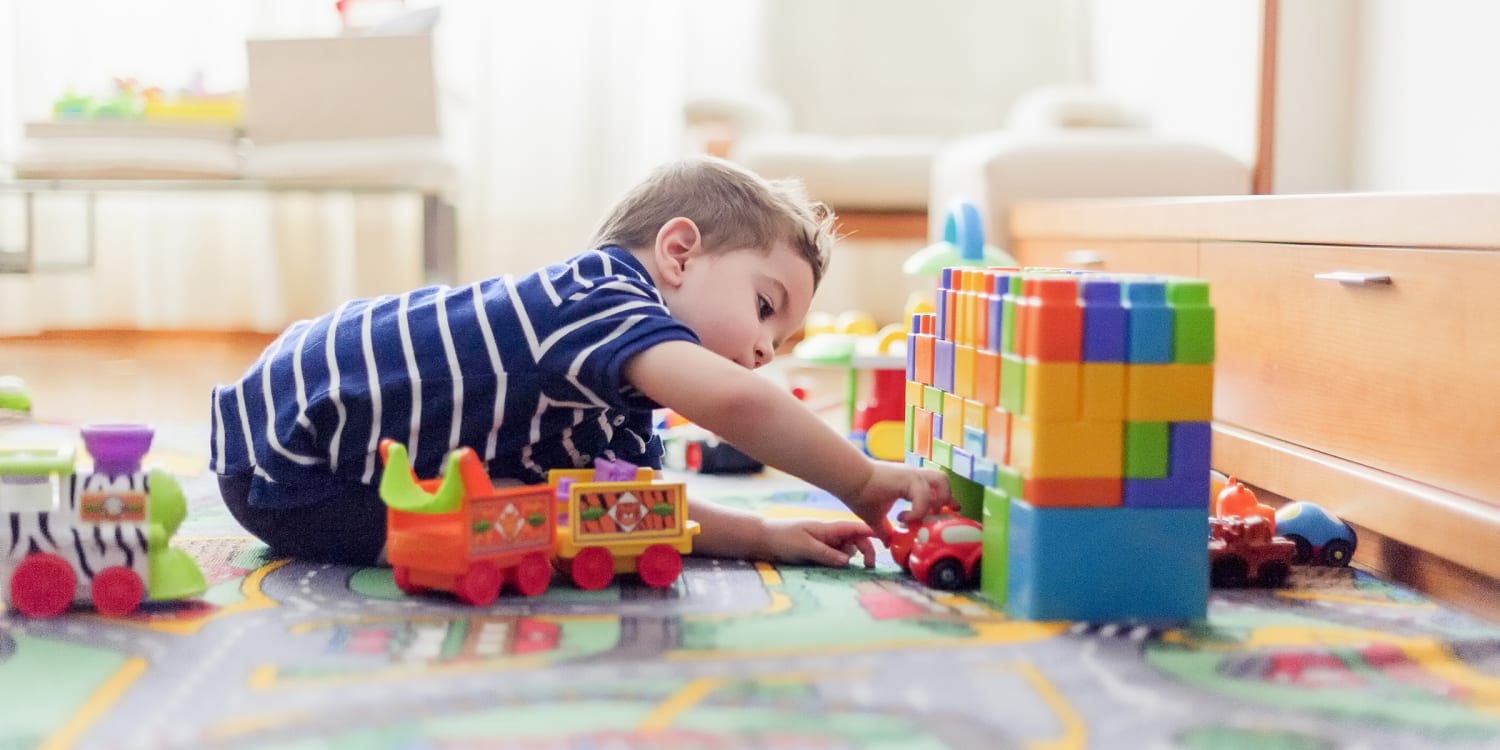
When you play with babies or toddlers, it may look like they’re just having fun, but they’re doing much more than that. They’re actually learning and developing essential life skills, like moving their bodies, thinking and reasoning, building vocabulary, and interacting with others. These skills are the building blocks that set the stage for their growth and progress in these areas as they grow older.
Cognitive Development through Play
Children between the ages of 3 and 5 often ask lots of questions and want to learn how things work. However, they do have quite short attention spans. Therefore, the best way for them to learn is through play, by which they will learn about the world around them naturally.
Some great ways to play with toddlers to support cognitive development include:
- Playing simple board games or card games, like ‘Snakes and Ladders’ or ‘Snap’
- Reading books with pictures
- Telling jokes
- Doing jigsaw puzzles
Fun Fact: The brain reaches 90% of its adult volume by the age of 6
Physical Development through Play
Outdoor play is especially important for strengthening kids’ muscles and bones. When kids run, jump, climb, throw and kick balls, and ride toys that require balance, they also build gross motor skills and start developing a habit of being active.
- Throwing, catching, bouncing and kicking balls of different sizes
- Walking, running or skipping along chalk lines
More gentle activities are also important for fine motor development, such as
- Playing with Playdough
- Drawing, scribbling and painting
- Threading beads onto a string
Social and Emotional Growth
Social and Emotional growth is just as important as cognitive and physical development. Children must learn to manage their emotions, empathize with others, and build lasting relationships. These crucial life skills are best nurtured during childhood, laying a strong foundation for their future.
Once again, social and emotional skills can be developed through play. Some ways are
- Pretend play – thinking from multiple perspectives will occur naturally!
- Playing with children of all ages – this will teach children to manage their emotions and be kind and understanding
- Leading the play – Letting a child lead improves their communication skills
- What can you do to make this work? The first step is to notice what a child is interested in. Ask them if you could join in, and don’t try to change the activity – just follow their lead.
Watching children figure things out is fascinating; their minds create many new connections as they explore. Play is the catalyst for growth, shaping cognitive, physical, emotional, and social development. Through play, they imagine, problem-solve, and learn to interact with others.
Sources:
https://www2.hse.ie/babies-children/play/development-through-play/
https://www.naeyc.org/resources/pubs/yc/may2019/outdoor-play-is-essential
https://raisingchildren.net.au/babies/play-learning/active-play/physical-activity-for-young-children
https://blogs.scientificamerican.com/beautiful-minds/the-need-for-pretend-play-in-child-development/
Stiles J, Jernigan TL. The basics of brain development. Neuropsychol Rev. 2010 Dec;20(4):327-48. doi: 10.1007/s11065-010-9148-4. Epub 2010 Nov 3. PMID: 21042938; PMCID: PMC2989000.